Moisture guide
Can you put epoxy on damp concrete floors?
Moisture in the slab is the most common reason a resin floor fails. Find out how a specialist measures dampness, what happens when there is no membrane, and which systems tolerate water that will not go away.
Why moisture stops epoxy from bonding
People ask can you put epoxy on damp concrete because they see water sitting on the surface or dark patches that never dry out. Standard epoxy needs a substrate that is below a certain moisture level to form a mechanical bond. If the concrete holds too much water, the resin cannot grip the pores. It sits on top instead of locking in.
The problem is worse in the United Kingdom than in drier climates. Rain, high humidity and ground water push vapour up through the slab constantly. A floor that looks dry at nine in the morning might be releasing enough moisture by midday to prevent adhesion. That is why a specialist does not rely on how the concrete looks. They measure it.
When someone coats over a wet slab anyway, the result is usually visible within weeks. Bubbles form under the film. Edges lift. The whole coating can peel away in sheets. Understanding this risk is the first step before choosing any system.
Testing the slab before anyone quotes
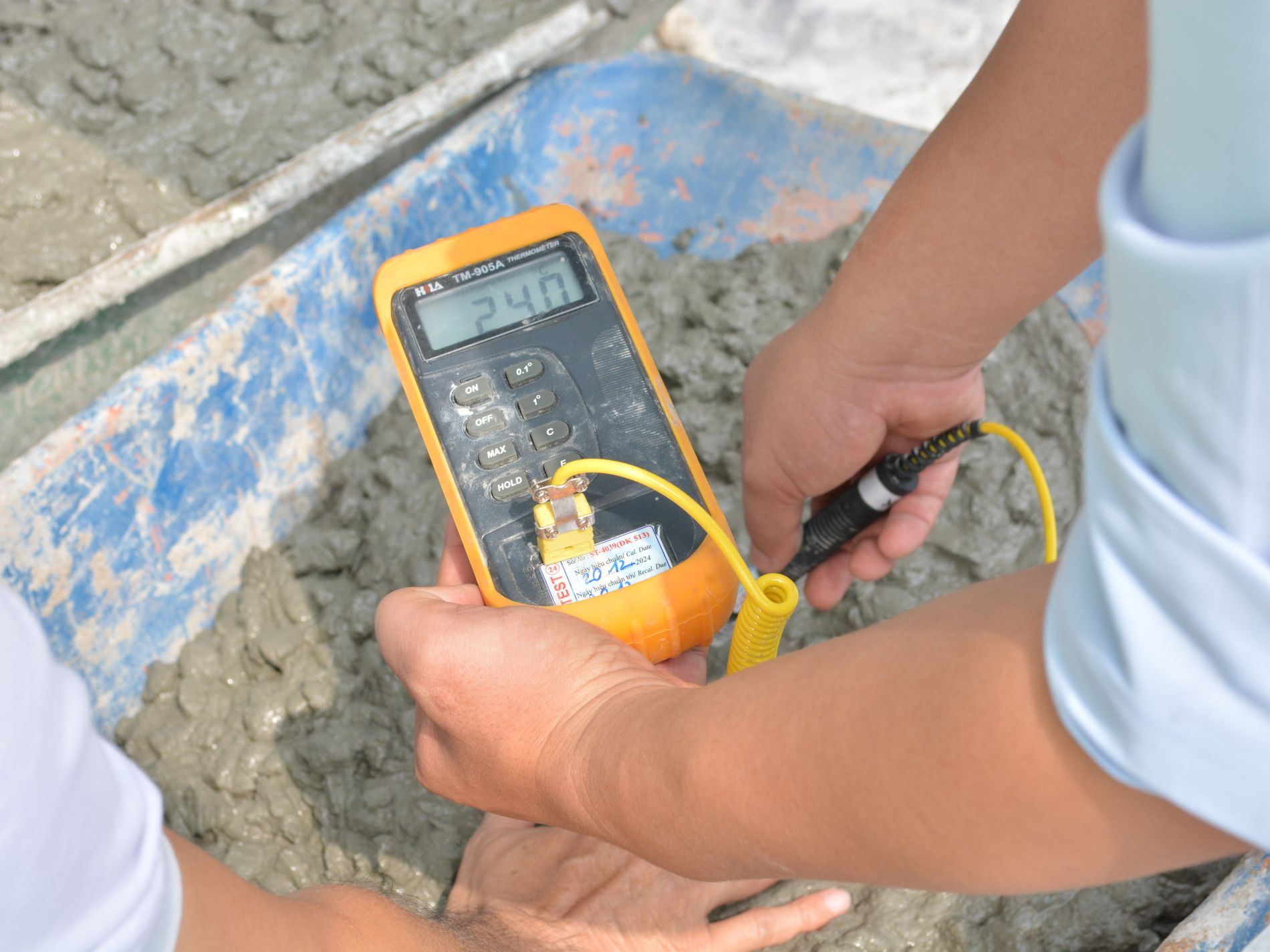
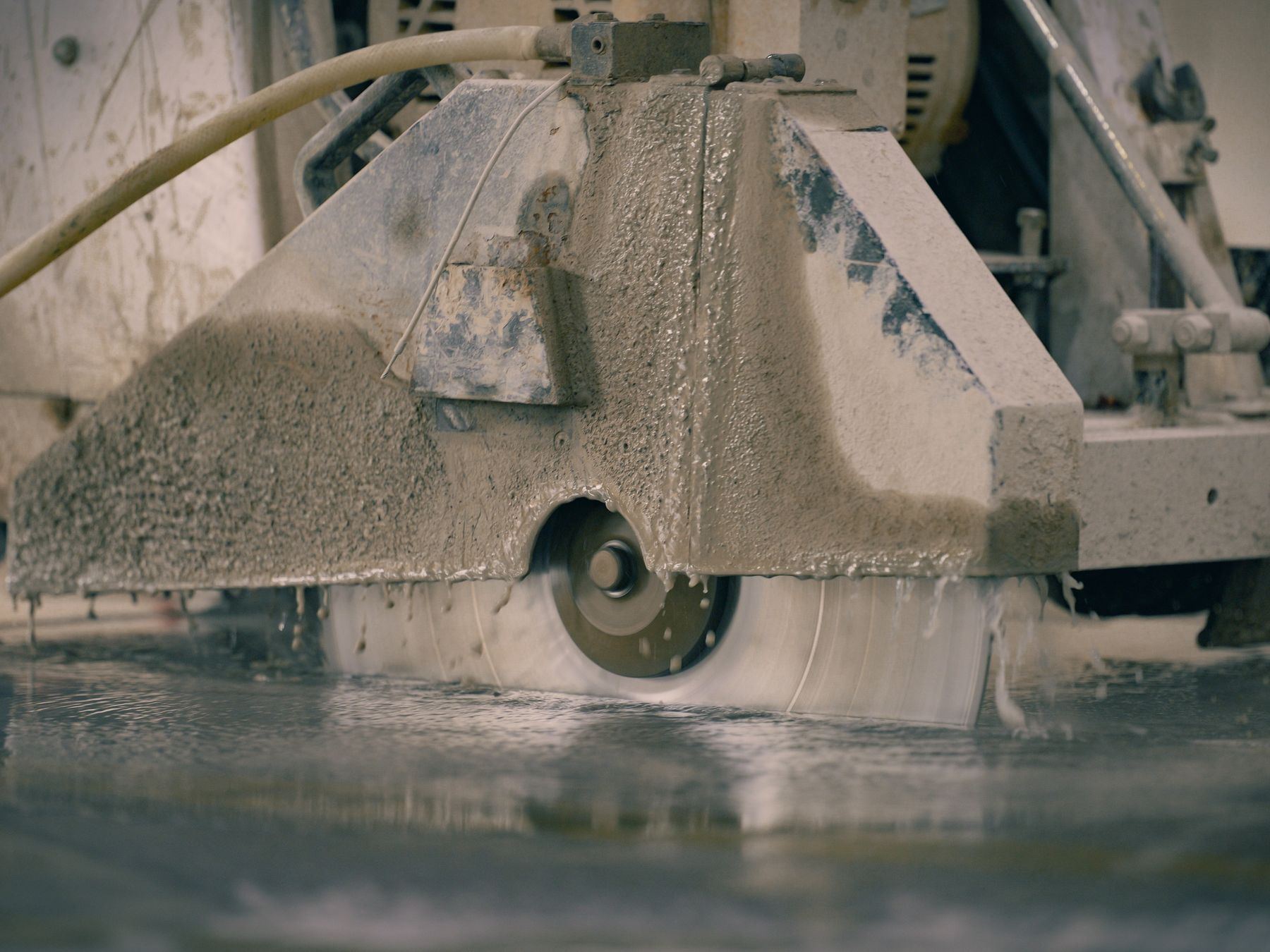
A proper moisture test for a concrete floor coating takes the guesswork out of the decision. The specialist uses instruments that read the relative humidity inside the slab, not just on the surface. They drill small holes to a set depth, insert probes and leave them to equilibrate. This tells them exactly how much water vapour the concrete is pushing upward.
Surface readings are misleading. A slab can feel bone dry to the touch while holding dangerous levels of moisture deeper down. That hidden water is what causes rising damp epoxy failure later on. The test also maps variation across the floor, since one corner near a loading bay door might behave differently from the centre of the room.
This testing adds a short amount of time to the initial visit but prevents expensive failures. Without those numbers, any quote is based on assumption rather than fact. A specialist will always want these figures before recommending a thickness or a product type.
What happens with no damp proof membrane
Many older industrial units in the United Kingdom were built with a no DPM warehouse slab. The concrete was poured straight onto compacted earth or hardcore without a polythene sheet underneath. Ground moisture travels upward through the capillaries in the concrete permanently.
That does not mean a resin floor is impossible. It means the choice of system changes entirely. A standard thin coat of epoxy will fail quickly on a slab like this. Instead, the specialist looks at thicker builds, moisture barriers applied as a primer or entirely different resin chemistries designed to handle constant vapour pressure.
If the unit has been standing for decades, the rate of moisture transmission may have settled into a steady state. Measuring it confirms whether that rate falls within the limits of a particular product. Guessing here leads to delamination, so the measurement comes first every time.
Drying times for new concrete slabs
A fresh pour contains a large volume of water used to make the mix workable. Much of it must evaporate before any coating goes down. New slab drying time for coating depends on thickness, ventilation and ambient temperature, but a general rule is one month per twenty five millimetres of depth. For a typical hundred and fifty millimetre industrial slab, that means around six months of drying under good conditions. Forced heating or dehumidifiers can reduce this period, but they must be used carefully. Drying the surface too fast while the core stays wet creates stress cracks and uneven moisture profiles. A specialist checks the slab with probes rather than relying on a calendar date. The reading dictates the schedule.
Systems built for damp substrates
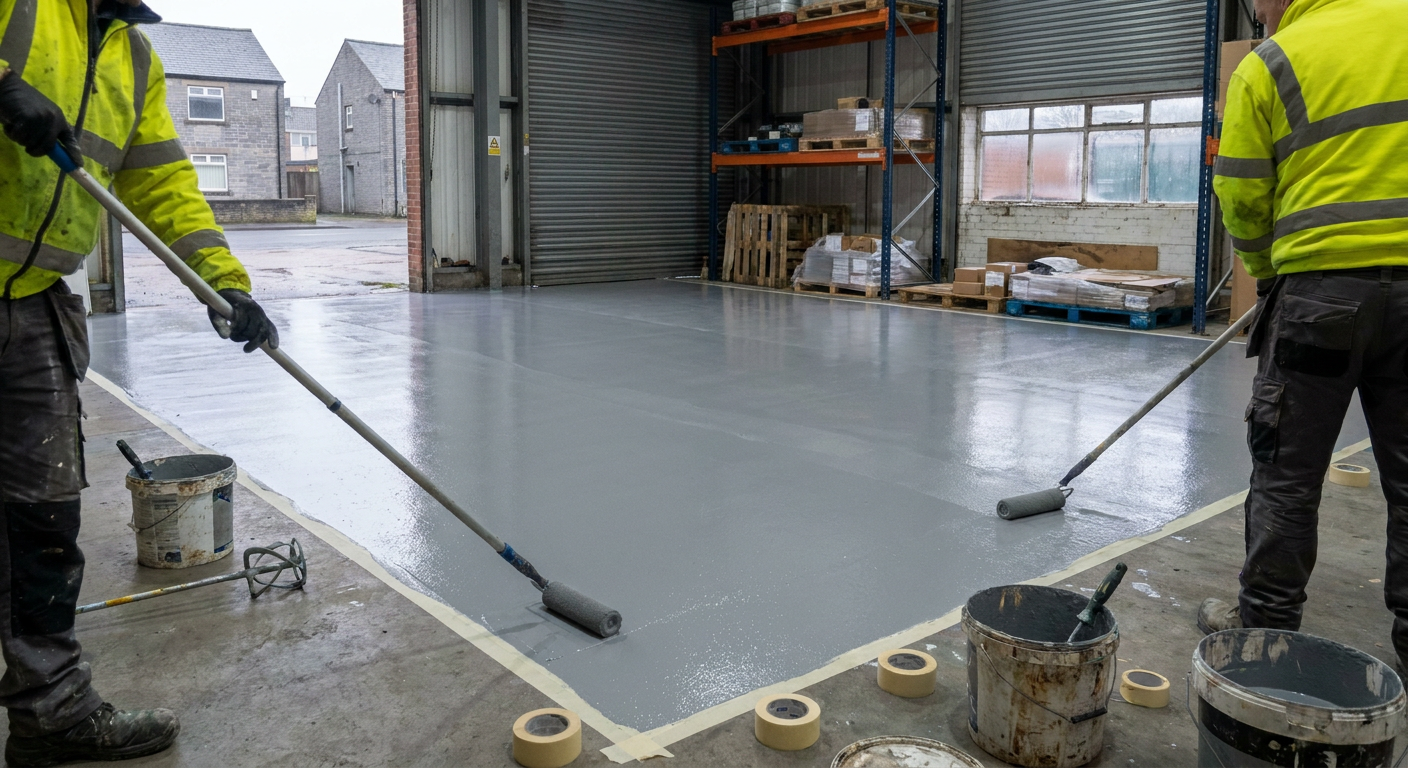
When the moisture reading is too high for standard epoxy but the floor needs covering, a damp tolerant resin floor system becomes the option. These products use modified chemistry, often polyurethane or moisture curing formulations, that react with water rather than being repelled by it.
They allow vapour to pass through without building pressure under the film. Some act as a surface damp proof membrane floor treatment in their own right, laid thick enough to block the moisture before a decorative topcoat goes over them. Others are designed as standalone wearing surfaces for warehouses and garages where appearance matters less than function.
The trade off is cost and application complexity. These systems require precise mixing ratios and strict attention to ambient conditions during installation. A specialist familiar with UK industrial environments knows which product suits a particular reading and traffic load. The wrong choice here wastes money just as surely as ignoring the moisture entirely.
Dealing with rain driven damp patches
Damp patches that appear after heavy rain point to a specific problem. Water is entering the slab from outside, either through walls, joints or a missing external drainage path. This is different from constant ground moisture. It is intermittent and tied to weather.
Before any resin goes down, the source of that water needs addressing. Coating over a patch that floods every November guarantees failure. A specialist traces the water path first. Sometimes sealing external joints or regrading the apron outside the building solves it. Once the slab stays dry through a wet spell, testing confirms whether the moisture has dropped low enough for a coating.
If the water cannot be stopped, the floor might need a breathable system or a physical drainage solution rather than a sealed resin surface. The answer depends on what the building allows and how the space is used daily.
Signs your concrete slab is too wet for standard epoxy
Moisture hides inside concrete long after the surface appears dry. These signs suggest water is present in quantities that will prevent a standard resin coating from bonding properly to the slab beneath it.
- 1
Dark patches on the surface
Areas that stay darker than the surrounding concrete often hold trapped moisture. They might shrink in warm weather but rarely disappear completely.
- 2
White salt deposits
A powdery white crust on the surface means water has moved through the slab, carrying dissolved salts upward and leaving them behind as it evaporates.
- 3
Lifting or bubbling old paint
Existing coatings that blister or peel away from the edges suggest vapour pressure is building underneath and breaking the bond.

- 4
A persistent musty smell
Damp concrete in a closed unit produces a distinct earthy odour. If ventilation does not clear it, the slab is likely releasing moisture constantly.
Questions about moisture and resin floors
Our slab has no damp proof membrane, can we still have a resin floor?
Yes, but the system must be chosen for that condition. A specialist measures the moisture transmission rate first. Thicker builds or moisture tolerant primers handle the constant vapour pressure that rises through an unprotected slab. Standard thin coatings will not last.
How do you test the concrete for moisture before quoting?
The specialist drills small holes into the slab and inserts relative humidity probes. These sit at a specific depth and measure the actual vapour pressure inside the concrete, giving a reliable number rather than a surface impression. The results determine which products qualify.
How long does a new concrete slab need to dry before coating?
The general allowance is one month for every twenty five millimetres of depth, so a standard industrial slab takes roughly six months. But the only reliable confirmation is a probe test. Ambient conditions and ventilation alter the drying rate significantly.
Is there a system that works on a damp floor instead of a surface membrane?
Moisture tolerant resin systems exist for exactly this situation. They use chemistry that accommodates water vapour without losing adhesion. Some act as a barrier layer themselves, applied thick enough to manage the moisture before a topcoat goes over them.
We get damp patches after rain, does that rule out epoxy?
Not necessarily, but the water entry point must be found and addressed first. Coating over a slab that floods intermittently leads to rapid failure. Once the source is fixed and the slab dries to an acceptable level, testing confirms whether epoxy is viable.
Does the moisture test add time or cost to the job?
It adds a short period to the initial assessment. Probes need time to equilibrate inside the concrete. This step prevents costly failures later, so specialists treat it as essential rather than optional. The expense of testing is small compared to replacing a failed floor.
What happens if someone coats over damp concrete anyway?
Vapour pressure builds under the film until the bond breaks. The coating blisters, lifts at the edges or peels away entirely. In severe cases, the trapped moisture turns alkaline and attacks the resin chemically, causing widespread discolouration and softening.
Will you test our floor as part of a site visit?
The specialist firm handling the work carries out the testing during their assessment. They bring the probes and interpret the readings on site. Those figures then dictate the specification they propose, ensuring the chosen system matches the actual conditions.
Find out what your slab needs
Send the details of your floor and its moisture history. A specialist reviews the information and arranges a site visit to take readings. There is no obligation to proceed beyond that conversation.
- No commitment required
- Site readings included
- UK wide coverage