Guides and articles
Resin and epoxy floor coating guides for UK readers
Find out how resin and epoxy floors hold up under forklifts, what preparation concrete needs before a coating goes down, and why some finishes peel while others last. Read the technical detail before you decide on a system.
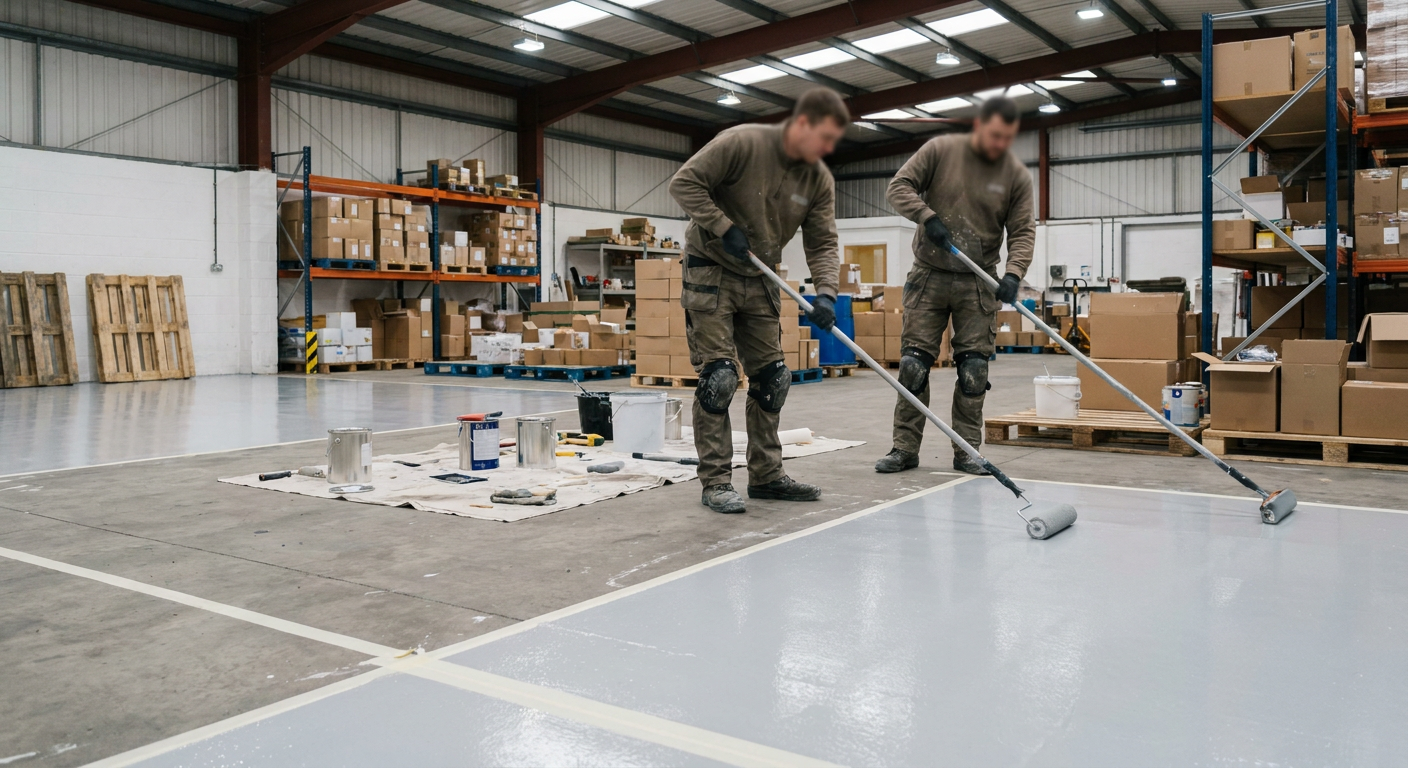
Preparing concrete for a resin or epoxy coating
A resin floor fails or holds depending on what happens before the first coat goes down. Concrete must be profiled so the resin has something to grip. The two methods used by specialist contractors are diamond grinding and shot blasting.
Grinding uses rotating discs to abrade the surface. It works well on slabs that are relatively flat but need the laitance removed. Shot blasting fires steel media at the concrete, which opens pores and strips away old paint or weak material faster than grinding can manage.
The choice between them depends on the condition of the slab and the thickness of the coating going over it. A thin seal coat needs a finer profile than a heavy screed. Moisture is the other factor. Epoxy will not bond to damp concrete, so specialists test for moisture vapour transmission before specifying a primer. If the readings are too high, a moisture-tolerant system or a physical damp proof membrane becomes necessary.
Skipping preparation is the most common reason an industrial floor peels within months of application. Every guide here starts with the substrate because the coating is only as sound as the concrete beneath it.
Choosing between epoxy and polyurethane systems
Epoxy and polyurethane are both resin systems, but they behave differently under load and temperature change. Epoxy cures hard and rigid. It handles static weight well and resists a wide range of chemicals, which makes it the default for warehouse aisles and workshops where pallet racking sits in one place.
Polyurethane has more give. It flexes slightly under impact and handles thermal shock better than epoxy. Food factories that wash down with hot water, or cold stores where the floor cycles between freezing and ambient temperatures, usually need polyurethane to avoid cracking.
Thickness matters as much as chemistry. A light foot-traffic area might need two millimetres of resin. A unit running heavy forklifts with solid tyres could require six millimetres or more. The thicker the system, the longer it takes to cure and the higher the cost per square metre.
Specialist firms assess traffic type, chemical exposure and slab condition before recommending a build-up. The specification guides here break down those variables so you know what questions to ask when a contractor visits your site.
How forklift traffic wears down a resin floor
Forklifts are the main source of wear on any warehouse floor. The damage does not come from the weight alone. Solid tyres generate far more friction than pneumatic ones, and the heat they produce softens certain resin systems over time.
Turning is worse than straight driving. When a counterbalance truck pivots on its front axle, the drive tyre scrubs the surface. Repeated scrubbing in the same aisle junction wears through the topcoat and into the body of the resin. Once the wear layer is gone, the floor underneath stains easily and loses its chemical resistance.
Joint edges take punishment too. Every time a loaded truck crosses a saw cut or a construction joint, the wheels drop slightly and strike the opposite edge. Over months, this spalls the concrete and breaks the resin away from the joint line.
Specialist contractors address this by specifying harder aggregates in the wear course, adding extra thickness at turning points, or using flexible joint fillers that move with the slab. Understanding where your trucks travel and how often helps determine which areas need reinforcement before the floor goes in.
Keeping a coated floor clean and intact
Resin floors are easier to clean than bare concrete, but the wrong method damages them. Alkaline cleaners strip the gloss off epoxy. Acidic washes attack the resin matrix itself. Specialist firms recommend pH-neutral detergents for daily mopping and mechanical scrubbers for larger areas.
Spills need attention based on what was spilled. Oils sit on the surface and create a slip risk. Solvents penetrate if left long enough and soften the resin. Acids etch the finish. Knowing the chemical resistance of your specific system tells you how quickly a spill must be cleared.
Maintenance also means watching for early signs of failure. A patch that sounds hollow when tapped has lost adhesion. A hairline crack radiating from a bolt hole will widen under traffic. Catching these problems early allows a contractor to cut out the affected area and patch it before moisture gets underneath.
The cleaning and maintenance guides here cover daily routines, periodic deep cleans and the point at which a repair becomes more economical than another coat.
Repairing cracks, chips and worn patches
No resin floor lasts forever without intervention. Damage usually appears at joints, around doorways where traffic concentrates, or where heavy objects have been dropped. Chips expose the concrete underneath, letting water and dirt work their way under the surrounding coating.
Repairs start with cutting back the damaged area to sound resin. Contractors use diamond blades to create clean edges rather than feathering the patch into the old floor, because a feathered edge lifts under traffic. The exposed concrete is then prepared, primed and filled with a resin matched to the existing system.
Colour matching is rarely exact. UV exposure changes the shade of the original floor over time, so a fresh patch stands out until it weathers. Some site managers choose to recoat the entire bay rather than live with a visible repair.
Peeling requires a different approach. If large sections are lifting, the cause is almost always moisture or poor original preparation. Patching over it wastes money. The guides here explain how to identify the root cause before deciding whether a local repair or a full replacement makes sense.
Applying coatings while a warehouse stays open
Shutting down a working warehouse costs more than the floor itself. Many operators need the coating applied while goods still move through the building. This limits the systems available and changes how the work is scheduled.
Fast-curing resins allow a section to be coated overnight and driven on by morning. Polyurethane and methyl methacrylate systems cure in hours rather than the days standard epoxy requires. The trade-off is working time: fast resins leave little margin for error during application.
Phasing the work is the usual approach. Contractors divide the floor into zones, moving stock from one area to another as each section is completed. Dust control matters because grinding one bay while packing occurs in the next contaminates products and machinery. Containment barriers and extraction units keep the working zone isolated.
Ventilation is another constraint. Resin fumes need airflow to disperse, but opening dock doors lets in humidity that ruins the cure. Planning the sequence around weather, shift patterns and delivery schedules determines whether the project succeeds without disrupting operations.
Get advice on your floor from a specialist
Send details about your home or unit and a specialist firm will respond with guidance. There is no obligation to proceed or accept a quote.
- No obligation
- Free guidance
- UK coverage