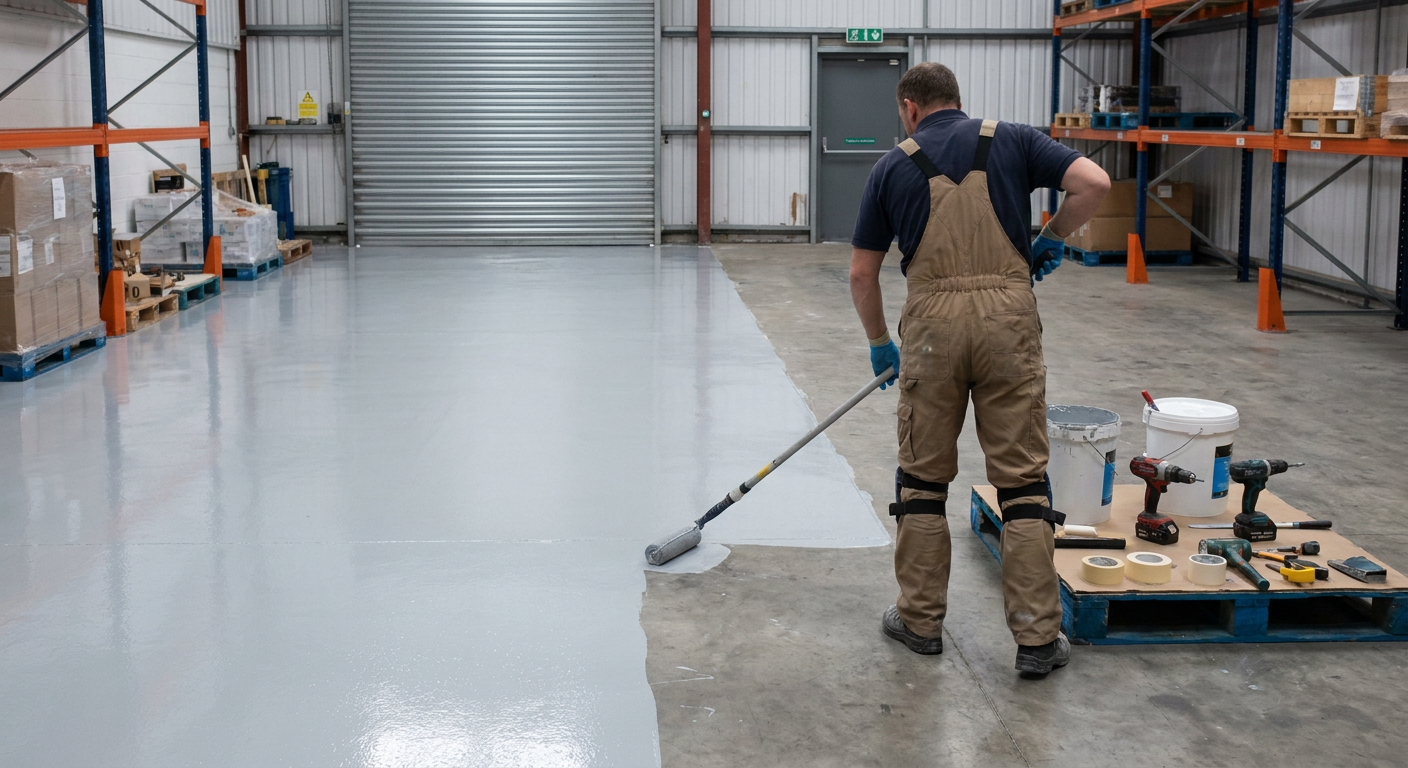
Anti slip floor coating
Anti slip floor coating for slippery floors
Wet areas, ramps and walkways around a home need more grip than bare concrete. An anti slip floor coating gives those spots the traction they lack. Describe the area you are worried about and a specialist firm will advise on what is needed.
- Grip matched to the surface
- Aggregate chosen for cleaning ease
- Applied by separate specialist firms
Describe the area
Where it is used
Surfaces that need extra grip at home
- Wet process areas
- Kitchens, utility rooms and wash areas stay wet often. A slip resistant ramp coating approach works here, using finer aggregates so the floor stays safe without trapping dirt underfoot.
- Ramps and slopes
- Any slope outside a garage or down to a lower ground floor needs wet area floor grip. Specialists broadcast aggregate into the resin before it sets so boots and shoes hold fast.
- Loading bays and drives
- A loading bay floor treatment handles vehicle weight and weather. The specialist firm uses heavier anti slip aggregate flooring systems to stop tyres from spinning when the concrete is wet.
- Walkways and paths
- Paths between buildings or along a garden edge can be coated with non slip walkway paint. Colour choices let you mark a safe route clearly against the surrounding ground.
Choosing the finish
How specialists balance grip against cleaning at home
The rougher the finish, the better the grip, but heavy texture traps mud and soap scum. A specialist firm tests small patches to find the point where safety meets easy mopping.
Aggregate comes in grades from fine sand to coarse quartz. Finer grains suit indoor kitchens; coarser stones work on outdoor ramps where water pools and boots need deep traction.
Existing coatings do not always need stripping. If the old layer is sound, a specialist can key the surface mechanically and apply a fresh slip resistant topcoat directly over it.
Walkways can be tinted differently from the main floor. This helps define a safe path through a workshop or garage without needing tape that peels up under foot traffic.
What happens after you send an enquiry
You describe the area that worries you and how it gets used. After that, the process belongs to the specialist firm handling the job.
-
As soon as you send it
Enquiry received
Your details go to a specialist firm covering your part of the United Kingdom. They read the description of the surface, the traffic it takes and any problems you have noticed.
-
Usually within a few
Site visit arranged
The specialist visits your home to look at the concrete, measure moisture and check how much preparation the surface needs before any coating goes down.
-
After the visit
Specification and quote
Based on what they found, the specialist writes up the aggregate grade, resin type and cost. You decide whether to proceed on your own timeline.
Checks a specialist makes before specifying grip
Getting the grip level wrong means either a floor that is still slippery or one that is too rough to keep clean. These checks happen in sequence so each result informs the next.
-
Moisture reading
The specialist measures dampness in the concrete. High moisture rules out standard epoxy and points toward a breathable polyurethane or a moisture-tolerant primer system instead.
-
Surface profile
They assess how smooth or pitted the existing slab is. A very smooth surface needs diamond grinding first so the new coating has something mechanical to bond against.
-
Traffic type
Foot traffic alone allows finer aggregate. If trolleys, prams or wheeled bins cross the area, the specialist selects a harder stone that will not crush flat under repeated rolling loads.
-
Cleaning method
Mopping requires a tighter texture than pressure washing. The specialist asks how you plan to clean the floor and picks an aggregate grade that matches that routine.
If readings conflict, the specialist may lay test patches to compare grip and cleanability side by side.
Questions about anti slip coatings at home
How much grip do I need for a wet process area?
A utility room or kitchen floor needs enough texture to hold a wet shoe but not so much that it snags a mop. Specialists usually specify a medium-grade quartz broadcast for these indoor spaces.
Will a heavily textured floor be harder to clean and mop?
Yes. Coarse aggregate creates valleys where dirt collects. That is why specialists match the grit to the actual risk rather than defaulting to the roughest option available.
Can anti slip be added to a ramp or loading bay already coated?
If the existing coating is firmly bonded, a specialist can abrade the surface and apply a new slip-resistant layer on top. Loose or peeling resin must come off first.
What aggregate grades are used and how are they chosen?
Grades range from 0.3mm aluminium oxide for light indoor use up to 2mm calcined bauxite for steep outdoor ramps. The specialist picks the size based on slope, water exposure and traffic.
How does a specialist judge the right level of grip for my site?
They measure the slope, check for standing water, note what footwear people use and ask how the floor gets cleaned. Those factors together dictate the aggregate size and resin thickness.
Can walkways be done in a different colour to the main floor?
Yes. Resin accepts pigment, so a specialist can lay a contrasting strip to mark a safe route through a garage or workshop without adding physical trip hazards.
How long does the area need to be closed off while it cures?
Foot traffic usually returns within twelve to twenty-four hours. Full cure for vehicles or heavy items takes longer, typically three to seven days depending on temperature and resin type.
Does the finish wear smooth over time and can it be topped up?
High-traffic paths will polish down eventually. A specialist can re-key the worn area and apply a fresh coat of resin with new aggregate to restore the original grip level.
Anti slip floor coating across the United Kingdom
Specialist firms operate throughout England, Scotland, Wales and Northern Ireland. When you send an enquiry, it reaches a firm that covers your specific region and understands local building conditions.
If your town is not listed during the enquiry, mention it anyway. Firms travel to most postcodes.
Get advice on anti slip floor coating for your home
Tell a specialist firm which area worries you and they will recommend the right aggregate and resin for the job.