Floor services
Resin flooring services across the UK
Every type of industrial resin and epoxy flooring handled by specialist firms in the United Kingdom. Find out which system suits your concrete, what preparation it needs, and how to ask for a price.
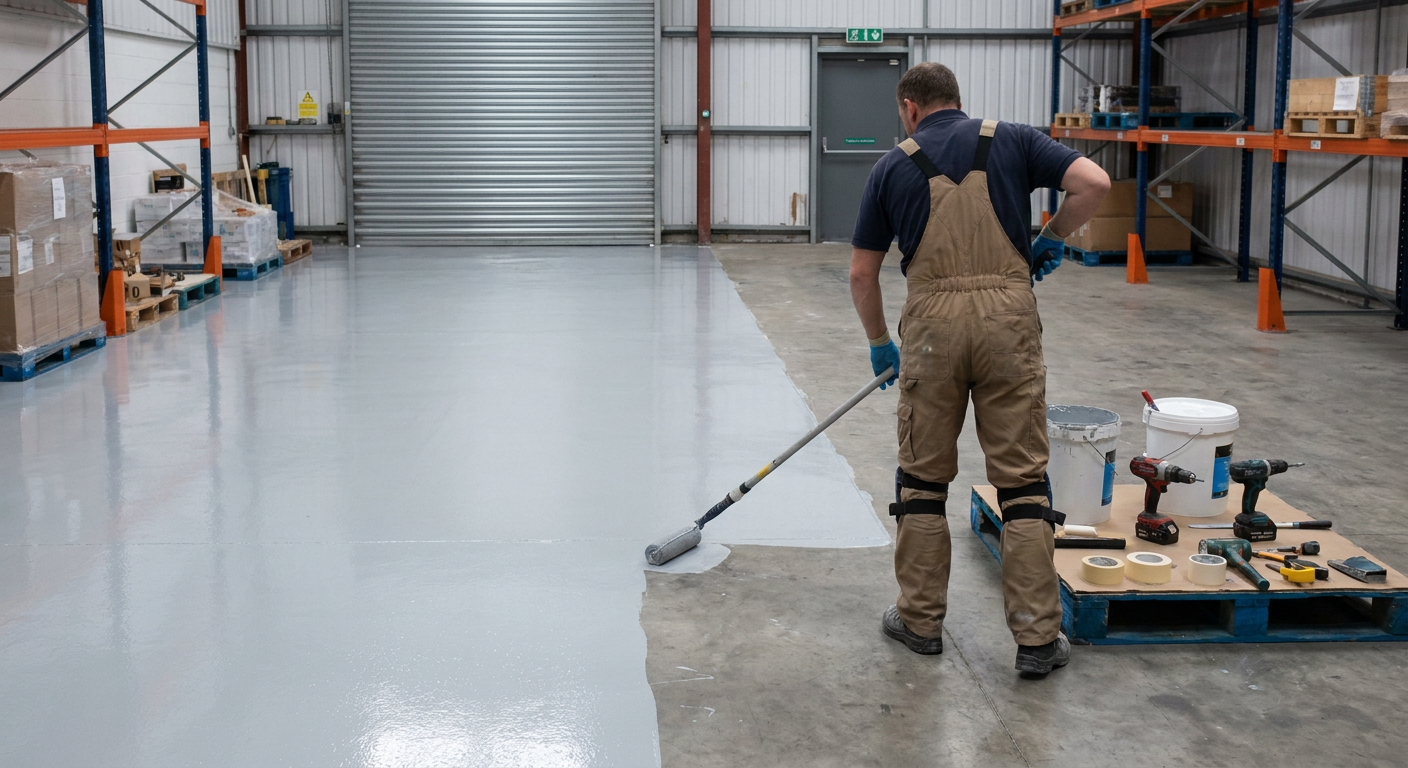
Epoxy resin flooring for industrial and commercial use
Epoxy resin forms a hard, continuous surface over prepared concrete. Specialist contractors apply it in warehouses, workshops and production areas where bare slabs would dust, stain or wear unevenly. The resin bonds directly to the substrate, so preparation matters as much as the coating itself.
Different environments call for different thicknesses and finishes. A light storage area might need a thin seal coat, while a unit taking constant forklift traffic requires a heavier build-up. Epoxy can be laid smooth or broadcast with aggregate for grip, depending on what happens on the floor every day.
The specialists who carry out this work assess moisture levels, check for existing sealers and grind or blast the concrete before any resin goes down. Skipping that step is the usual reason an epoxy floor peels later. Every job starts with the slab, not the tin.
Garage floor coatings built for vehicles and tools
A garage floor takes oil drips, dropped spanners, tyre marks and the weight of whatever you park on it. Bare concrete absorbs all of it. A resin coating seals the surface so spills wipe off rather than sinking in, and it stops the slab from generating dust underfoot.
Specialist applicators use systems designed for domestic garages that cure harder than standard paint. These coatings resist hot tyre pickup, which means a car sitting in one spot after a long drive will not pull the finish away when you move it.
Preparation follows the same principles as larger industrial jobs. The contractor profiles the concrete mechanically so the resin has something to grip. Without that mechanical key, even a good product will lift at the edges within months. The result is a floor that looks clean and stays that way through daily use.
Warehouse floor painting and heavy-duty coatings
Warehouse floors endure pallet trucks, racking legs and thousands of footfalls. Painting a warehouse floor means applying a coating system thick enough to handle that abuse without wearing through to the concrete beneath. Specialist firms choose the resin type and build thickness based on the traffic plan for the unit.
A high-bay warehouse storing pallets needs a different specification from a picking area where staff walk all day. The coating must resist abrasion in some zones and chemical spillage in others. Polyurethane systems flex slightly under impact, while epoxies offer higher compressive strength. The right choice depends on what moves across the floor.
Contractors often work around active operations, sectioning the warehouse so part of the building stays open. They schedule pours during quiet shifts and manage curing times so the next shift can walk on the new surface safely.
Anti-slip floor coatings for wet and sloping areas
Smooth resin becomes slippery when wet. Any floor that sees water, oils or wash-downs needs an anti-slip profile built into the coating. Specialists achieve this by broadcasting graded aggregate into the wet resin or by using textured topcoats designed for slip resistance. The amount of grip required varies. Too much texture makes a floor hard to clean; too little leaves it dangerous. Contractors measure slip resistance against recognised standards and adjust the aggregate size accordingly. Food factories, bottling plants and commercial kitchens rely on these finishes daily. The coating must resist both the slip hazard and the cleaning chemicals used to maintain hygiene. Specialist installers balance those demands when selecting the resin system and the aggregate blend. Find out what an <a href="/floor-systems/anti-slip-floor-coating">anti-slip floor coating</a> involves for wet and sloping areas.
Concrete floor screeding to level and prepare slabs
Resin coatings follow the shape of whatever sits beneath them. If the concrete is uneven, the finished floor will be too. Screeding corrects falls, fills hollows and brings old slabs back to a level datum before any resin goes down.
Specialist screeders pump or pour levelling compounds that flow across the substrate and set hard. These are not decorative finishes. They exist to create a flat, sound base for the final coating. Depth matters: some compounds work at a few millimetres, while others fill gaps of several centimetres.
Drying time depends on the product and the conditions in the building. Applying resin over a screed that still holds moisture causes adhesion failure. Contractors test the moisture content before proceeding, because rushing the sequence ruins both layers.
Floor line marking for aisles, bays and safety routes
Lines on a warehouse floor direct traffic, define storage bays and mark pedestrian routes. Painted lines chip under forklift wheels within weeks. Resin-based line marking lasts far longer because it bonds chemically to the floor coating or the prepared concrete.
Specialist marking teams lay out the grid using laser levels or string lines to keep everything square. They mask the routes, apply the resin and remove the tape before it cures fully so the edges stay sharp. Colours follow workplace safety conventions: yellow for aisles, red for fire exits, blue for raw materials.
Line marking usually happens after the main floor coating has cured. Planning the layout before the floor goes down avoids delays, since moving racking later to match painted lines costs more than getting the drawing right first.
Resin floor repairs for cracks, chips and worn patches
Even a well-installed resin floor takes damage eventually. A dropped load cracks the surface, a chemical spill softens a patch, or years of forklift traffic wear through the coating at turning points. Repairing these faults early stops them spreading into the concrete below.
Specialist repair contractors cut out the damaged area, clean the exposed substrate and rebuild it with matching resin. The goal is a flush repair that handles the same loads as the surrounding floor. Feathering the edges prevents a lip that catches pallet truck wheels.
Some repairs involve injecting resin into hairline cracks to stabilise the slab before recoating. Others require cutting back to sound material over a wider area. The method depends on what caused the damage and whether the underlying concrete is still structurally sound.
Ask about your floor
Send details about your space and what happens on it. A specialist firm will review the information and respond with advice or a quote. There is no obligation to proceed.
- No commitment required
- Specialists reply directly
- Advice tailored to you
Floor systems
- Epoxy Resin Flooring
Epoxy resin flooring gives concrete a hard, sealed surface for factories and workshops. Learn about build-ups, finishes and what suits your floor.
- Garage Floors
Garage floor coating covers dusty, stained concrete with a sealed resin finish. Find out how floors are prepared and which finishes handle tyres and oil.
- Warehouse Floors
Warehouse floor painting marks out aisles and protects concrete from forklift traffic. See coating choices, anti slip options and how downtime is planned.
- Anti Slip Coating
Anti slip floor coating adds grip to concrete, resin and tiled floors. Compare aggregate grades, finishes and the areas where extra grip matters most.
- Screeding
Concrete floor screeding levels and smooths a slab ready for coating. Read about screed depths, drying times and when a new screed is the better option.
- Line Marking
Warehouse floor line marking sets out aisles, walkways, bays and hazard zones. See paint and tape options, colour choices and how layouts are planned.
- Resin Floor Repairs
Resin floor repair covers cracks, blisters, delamination and worn patches in epoxy floors. Learn what causes failure and how damaged areas are patched.