Advice and guides
Industrial flooring advice before you specify a floor
Find out what to check before coating a concrete slab, how long curing takes, and which resin suits your unit. Read the guides below or send details of your floor for a specialist firm to assess.
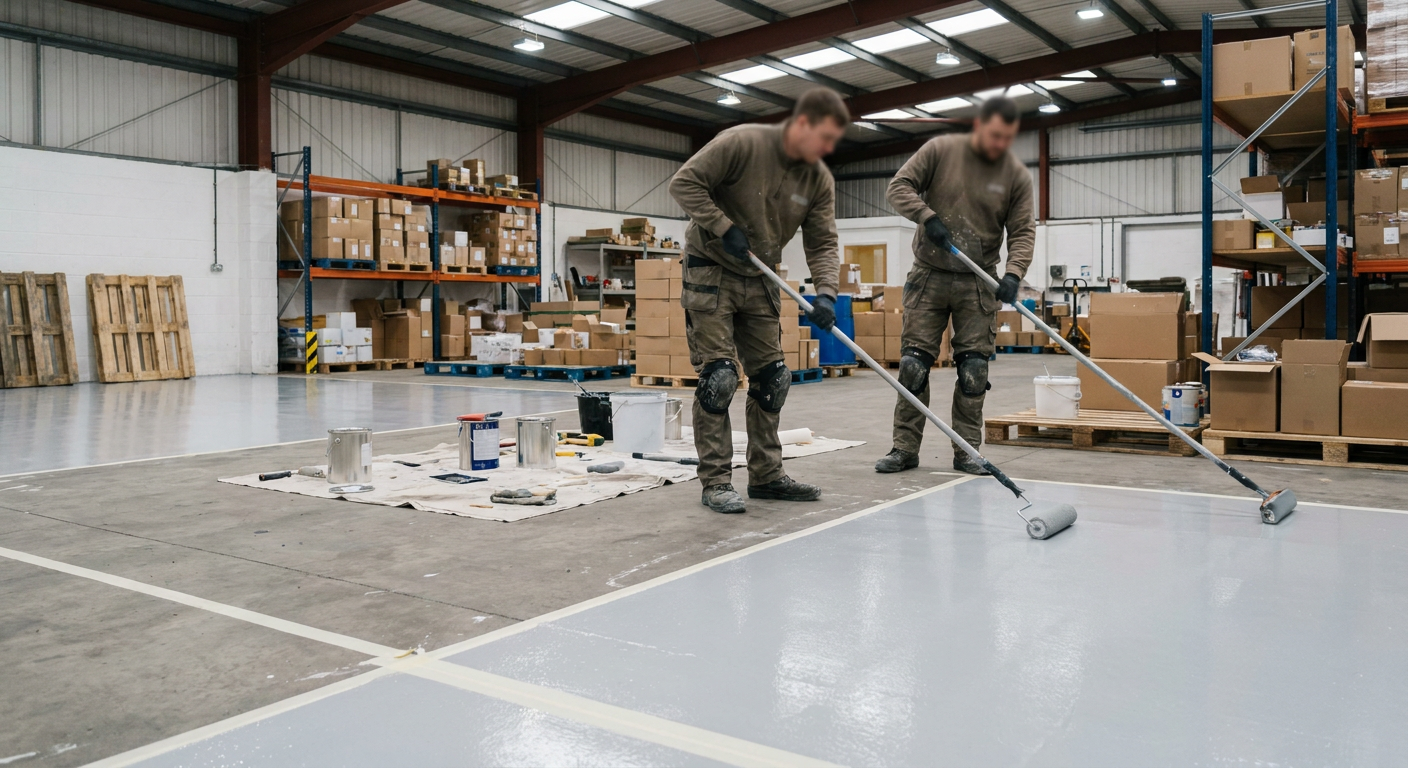
Picking the right finish for a storage unit or workshop
Choosing a floor for factory spaces, storage units or small workshops starts with knowing what will travel over it. A general storage unit on an industrial estate usually sees pallet trucks and foot traffic rather than heavy plant, so a medium-build epoxy coating often does the job. For heavier loads, a thicker screed holds up better under steel wheels.
Warehouse floor finish options range from thin seal coats that stop dust to multi-layer systems built for constant forklift movement. The best floor for storage unit racking aisles depends on the weight those aisles carry daily. An epoxy floor for a small workshop needs to handle dropped tools and spilled oils without staining.
Specialist firms across the United Kingdom install these systems after checking the condition of the existing concrete. They measure moisture, test surface strength and recommend a build-up that matches the actual use. Industrial unit flooring ideas found online rarely account for local conditions like damp slabs in older British buildings, so a site visit matters more than browsing pictures.
Downtime, phasing and keeping the unit running
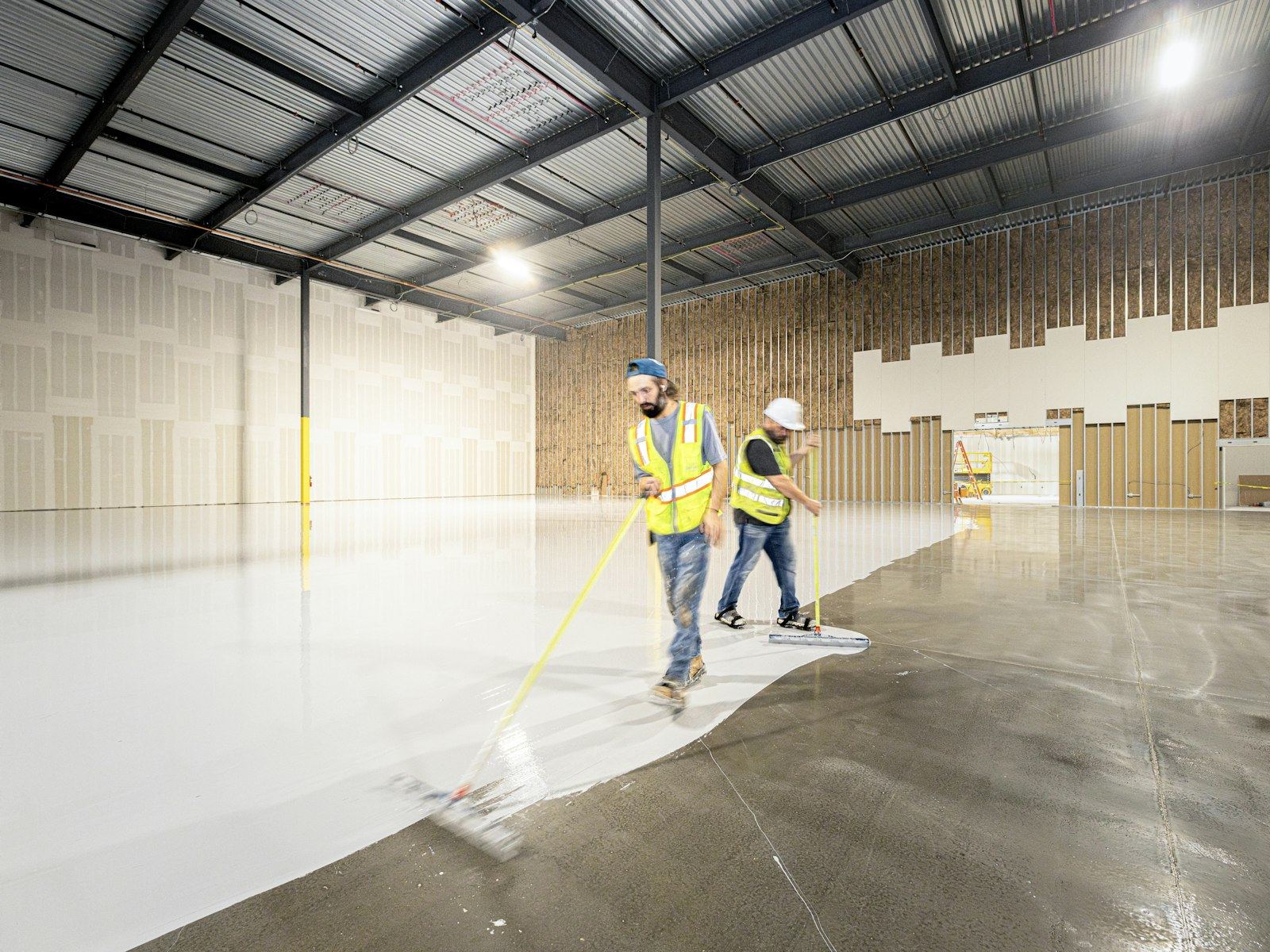
A common worry is how long the warehouse will be out of action while a new floor goes down. Curing times vary by product and temperature. Standard epoxies need at least twenty-four hours before foot traffic and several days before heavy vehicles return. Polyurethane systems can cure faster but cost more.
Work can usually be done in sections so part of the unit keeps running. A specialist contractor divides the space into bays, coating one zone while stock sits in another. This requires planning around racking layouts and delivery schedules. Phased work adds time to the overall project but avoids shutting the whole operation.
Temperature affects everything. In an unheated unit over winter, resin may not cure properly if the slab drops below ten degrees. Specialist firms use heaters or switch to cold-tolerant formulations during colder months across the UK. Ask about this early, because applying resin to a freezing slab causes adhesion failure that shows up weeks later.
Checking the slab before asking anyone to quote
Before asking anyone to quote, look at the concrete slab yourself. Check for standing water, dark patches that suggest rising damp, or areas where old paint is flaking away. These signs change what preparation is needed and what products will stick.
Concrete slab preparation determines whether a coating lasts six months or six years. Grinding or shot blasting removes laitance and opens the pores so the resin bonds mechanically. If the slab has cracks wider than a few millimetres, they need filling before any coating goes down. Specialist firms carry out moisture tests using surface hygrometers or calcium chloride kits to confirm the slab is dry enough.
If you are leasing the unit, check what the landlord allows. Most commercial leases permit surface coatings because they protect the slab, but structural changes like deep grinding might need written consent. Send a copy of the relevant lease clause when you enquire so the specialist firm knows the boundaries before proposing a specification.
Comparing quotes and understanding what happens next
Two industrial flooring quotes often look completely different because they specify different thicknesses, preparation methods or resin chemistries. One might include diamond grinding while the other assumes a simple clean. Compare the preparation steps first, then the dry film thickness, then the warranty terms. Price per square metre means little without matching specifications.
After you make an enquiry through Warehousefloor, the details go to a specialist firm covering your area of the United Kingdom. Someone from that firm contacts you to discuss the floor and usually arranges a site visit to inspect the slab in person. They take moisture readings, measure the area and note any damage.
That visit produces a specification and a price. You are not committed to anything by sending your details. The specialist firm uses the visit to confirm whether the system you asked about actually suits your slab, or whether a different approach makes more sense for the conditions they find.
Signs your warehouse floor needs attention
Bare concrete degrades under traffic. Dust rises, spills soak in and cracks spread. Spotting the early signs helps you act before the slab deteriorates further and limits what preparation a specialist firm must do later.
- 1
Dust on stored goods
Fine grey powder settles on boxes and pallets. The surface is breaking down under traffic and releasing particles constantly.
- 2
Dark damp patches
Areas that stay darker than the surrounding concrete suggest moisture moving up through the slab, which prevents most resins bonding.
- 3
Spalling near joints
Edges of saw cuts crumble and break away. Forklift wheels catch the lip and accelerate the damage each time they pass.
- 4
Flaking old paint
Previous coatings lift in sheets or chips. The bond failed, possibly because the concrete was not prepared correctly before application.
Common questions about resin floors
-
Answers to what buyers across the UK ask before specifying a new industrial floor coating for their unit.
- Lease restrictions
- Most landlords allow surface coatings. Structural grinding may require written consent. Check your lease terms before commissioning work.
- Comparing two quotes
- Match the preparation method and resin thickness first. Price per square metre varies wildly when specifications differ.
- Winter installation
- Unheated units drop below curing thresholds. Specialists use heaters or cold-tolerant resins to keep projects viable through UK winters.
- Phased installation
- Work proceeds bay by bay so part of the unit stays operational. Planning around racking and deliveries keeps stock moving.
- Slab checks before quoting
- Look for damp patches, wide cracks and flaking paint. Note these when you enquire so the specialist brings the right testing equipment.
- Downtime expectations
- Standard epoxy systems need around 24 hours before they take foot traffic. Forklifts require a longer wait because the coating must reach full hardness before handling point loads.
Tell us about your floor
Send details of your unit and its condition. A specialist firm covering your region receives the information and contacts you directly to arrange a site visit. There is no obligation to proceed.
- No obligation to proceed
- Specialist covers your region
- Site visit follows enquiry