Preparation guide
Shot blasting or grinding: preparing concrete for resin
Resin coatings fail when the concrete underneath is weak, dusty or sealed. Find out how shot blasting and grinding strip laitance and old paint to leave a sound surface that holds a floor coating in place.
Why preparation decides whether a resin floor lasts
A resin coating bonds mechanically. It flows into the pores of the concrete and cures around them, locking itself to the slab. If those pores are blocked by dust, laitance or an old layer of paint, the resin sits on top rather than gripping the surface beneath.
Laitance is the weak, milky layer of cement and fine aggregate that rises to the top of a concrete pour as it sets. It looks solid but crumbles under pressure. Applying epoxy over laitance means the coating sticks to a skin that will eventually separate from the structural slab below. The resin then lifts away, taking the laitance with it.
Old sealers and paints cause the same problem. They form a barrier between the new coating and the raw concrete. A specialist contractor strips these layers back completely before any resin goes down. The goal is bare, open-pored concrete that absorbs moisture and allows adhesion. Skipping this step is the most common reason an epoxy floor peels within months of application.
Shot blasting: how it works and where it fits
Shot blasting fires small steel abrasive media at the concrete surface under high velocity. The impact fractures the laitance, breaks up old coatings and opens the pores of the slab. A vacuum system attached to the machine collects the spent media and debris immediately, leaving a clean, textured profile behind.
This method suits large, flat areas such as warehouse floors and factory units. The machines cover ground quickly and produce a uniform texture across the whole slab. Because the process is dry, there is no slurry to manage and no waiting for the surface to dry out before priming begins.
The texture left by shot blasting resembles coarse sandpaper. That roughness gives the primer something to grip. On a smooth power-floated slab, resin would slide off during application and peel once traffic starts. The blasted profile prevents both problems. Specialist contractors select the size of the steel shot and the speed of travel to match the hardness of the concrete they are working on.
Grinding: when a diamond disc is the better choice
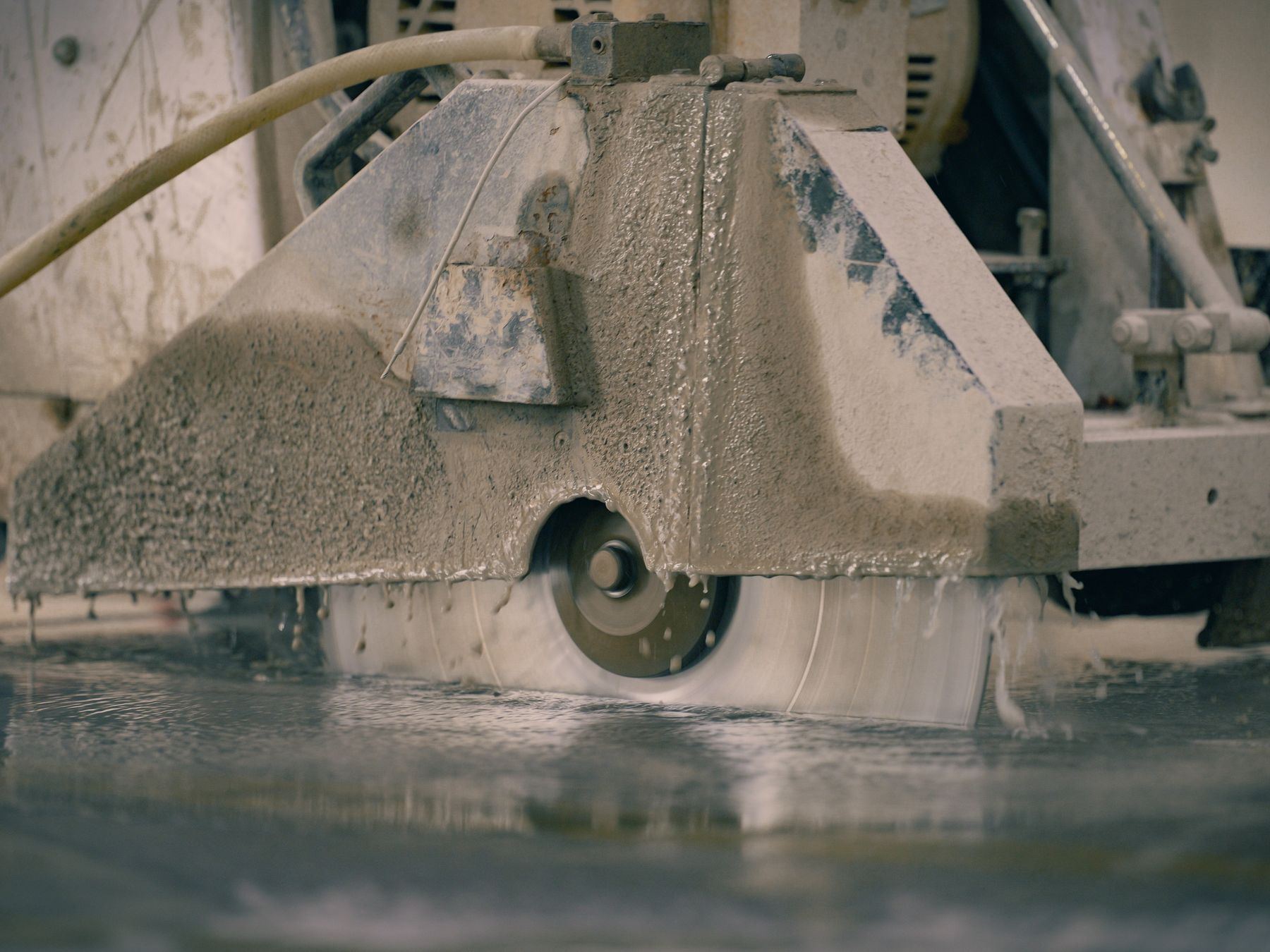
Diamond grinding uses rotating discs embedded with industrial diamonds to abrade the concrete surface. Unlike shot blasting, which relies on impact, grinding cuts through material. This makes it the preferred method for removing thick epoxy build-ups, heavy adhesives or uneven ridges left by poor finishing.
Grinding also levels minor imperfections. Where a slab has slight undulations or trowel marks, the discs can flatten them enough for a thin resin coat to sit evenly. Shot blasting follows the existing contours of the floor; grinding reshapes them.
The process generates fine concrete dust, so the machines must be paired with extraction units. In occupied buildings or food factories, dust control is a priority. Wet grinding is sometimes used to suppress airborne particles, though the slab then needs time to dry before any moisture-sensitive epoxy is applied. Contractors choose between wet and dry methods based on the resin system specified and the schedule available for the project.
Choosing between blasting and grinding
The decision depends on what is on the floor and what condition the slab is in. New concrete with only laitance usually responds well to shot blasting. It is faster, cheaper and leaves an ideal profile for a standard epoxy or polyurethane coating.
Floors with multiple layers of old paint, mastic residues or deep scoring need grinding first. The cutting action removes stubborn materials that bouncing steel shot cannot dislodge. Once the heavy contaminants are gone, a lighter blast pass often follows to texture the freshly exposed concrete.
Moisture is another factor. If a damp test shows elevated readings in the slab, the preparation method must not trap water. Grinding can burnish the surface if done too aggressively, closing the pores that allow moisture vapour to escape. A specialist contractor tests the concrete beforehand and sequences the work so the surface stays open and breathable until the primer seals it.
What happens after the surface is prepared
Once the slab is stripped back to sound, open concrete, the window for applying resin is short. Dust settles, humidity changes and foot traffic can contaminate the profile again. Contractors typically prime the floor within hours of finishing preparation.
The primer penetrates the open pores and cures to form a chemical bridge between the concrete and the subsequent resin layers. Without proper mechanical preparation, even the best primer will fail because it bonds to debris instead of the slab.
After priming, the chosen floor system goes down. That might be a thin anti-slip coating for a ramp, a thick screed for a loading bay, or line marking for aisles. Each system relies entirely on the work done before it arrived. The visible finish gets the attention, but the invisible preparation does the actual holding. A floor that was blasted or ground correctly will carry forklift traffic, resist chemicals and stay flat for years longer than one applied over an unprepared slab.
Ask about preparing your concrete floor
Send details of your floor and its current condition. A specialist contractor reviews the information and advises on preparation and coating options, with no obligation to proceed.
- No obligation to proceed
- Specialist advice included
- UK-wide coverage