Maintenance guide
Cleaning and maintaining a resin floor in daily use
A resin floor lasts longer when it is cleaned the right way. Find out which tools remove grit without scratching, why certain chemicals damage the surface, and how regular maintenance keeps the finish slip resistant.
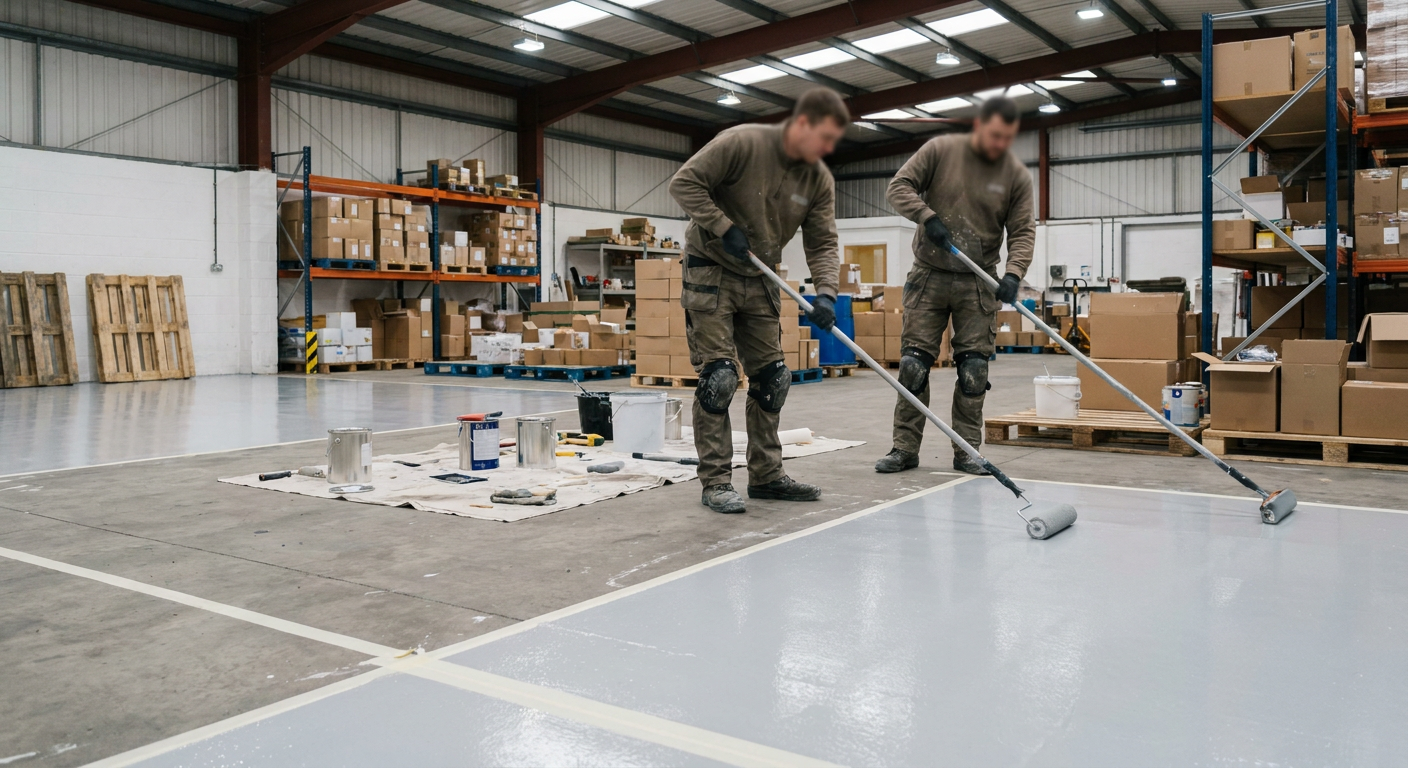
Why daily cleaning matters for a resin surface
Dust, sand and small stones act like sandpaper underfoot or beneath wheels. When they sit on a resin floor, every step or forklift pass grinds them into the coating. Over weeks, this dulls the finish and wears through the top layer.
Removing loose debris every day prevents that friction. A soft brush or a dry microfibre mop picks up grit without scratching. In busier areas where pallet trucks move constantly, a ride-on sweeper covers more ground before the dirt gets pressed into the surface.
Leaving spills to dry creates another problem. Sugary liquids leave a sticky film that attracts more dirt; oils make the floor slippery even if an anti-slip aggregate was broadcast into the original coating. Wiping spills as they happen stops them bonding to the resin. Regular attention means the floor stays safe to walk on and avoids the need for deep chemical stripping later.
Sweeping, mopping and mechanical scrubbing
Start with a dry sweep to lift loose material. Push brooms with stiff bristles work for large open spaces, but softer heads are better where the floor has a high-gloss finish that scratches easily.
For wet cleaning, a flat mop and a bucket of warm water handle light soiling. Change the water often. Mopping with dirty water just moves grime around and leaves a streaky film once it dries. In warehouses or food production units, a mechanical scrubber-dryer lifts dirt and vacuums the water in one pass, leaving the surface ready for traffic within minutes.
Avoid rotary buffers fitted with abrasive pads. They cut into the resin rather than polishing it. If a specialist needs to restore shine on an older floor, they will select a pad designed specifically for coated concrete. For everyday work, gentle agitation from a soft brush or a non-abrasive pad is enough to loosen dried marks without thinning the coating.
Choosing cleaning products that will not harm the coating
Resin floors tolerate mild detergents well. A pH-neutral cleaner diluted in warm water removes most warehouse dirt, tyre marks and general grime. Read the label before using anything stronger.
Acidic cleaners, including brick acid and some toilet descalers, attack the surface of epoxy and polyurethane coatings. They etch the finish, leaving dull patches that trap dirt faster. Alkaline degreasers can be used for heavy oil stains, but they must be rinsed off completely. Left to dry, they form a white residue that reduces grip.
Solvents such as acetone, paint thinner or methylated spirits soften resin. Spilling them during maintenance work elsewhere in the building can leave permanent marks. If a solvent does land on the floor, wipe it up immediately and rinse the area with clean water. Specialist firms that install resin systems can advise on which commercial cleaning fluids suit a particular coating type, since formulations vary between standard epoxies and heavier-duty polyurethane screeds.
Protecting slip resistance over time
Many resin floors include a textured finish or scattered aggregate to provide grip. Dirt filling those tiny gaps makes the surface feel smooth and increases the risk of slipping, especially near doorways where rain is tracked inside.
Scrubbing with a medium-stiff brush keeps the texture open. Pressure washers seem like a quick fix, but too much force strips the aggregate out of the resin or drives water underneath the coating at joints and edges. A scrubber-dryer set to moderate pressure cleans deeply without that risk.
If the floor has started to feel slick despite regular cleaning, the texture may have worn down from heavy traffic. A specialist contractor can apply a fresh anti-slip coating over the existing surface, restoring grip without removing the whole floor. Checking high-traffic routes periodically helps spot this wear before someone slips.
Spotting damage early and arranging repairs
Small chips and hairline cracks let water reach the concrete underneath. Once moisture sits below the coating, it blisters and peels outward from the damaged spot. Catching these flaws early limits the area a specialist needs to fix.
Walk the floor regularly and look for pale spots where the resin has thinned, edges lifting around drainage channels, or new cracks following the path of heavy wheel traffic. Forklift tyres concentrate enormous weight on a small contact patch, so turning circles and aisle ends tend to wear first.
When damage appears, a resin floor repair specialist grinds out the affected section, primes the exposed concrete and fills it with matching material. Leaving a chip untreated invites further breakdown, particularly in cold stores or wash-down areas where temperature changes and standing water accelerate failure. Prompt attention keeps the floor intact and extends its working life by years.
Need advice on your resin floor?
Send details about the floor and what is happening to it. A specialist firm will review the information and respond with guidance. There is no obligation to book any work.
- No obligation
- Specialist response
- Free initial advice